 We’ve just set up a new store on Etsy. If you prefer to buy from that website you now can. We currently only have a small selection of items for sale but this will grow over the coming months.
Check out the store here PhotographyAttic on Etsy
We’ve just set up a new store on Etsy. If you prefer to buy from that website you now can. We currently only have a small selection of items for sale but this will grow over the coming months.
Check out the store here PhotographyAttic on Etsy
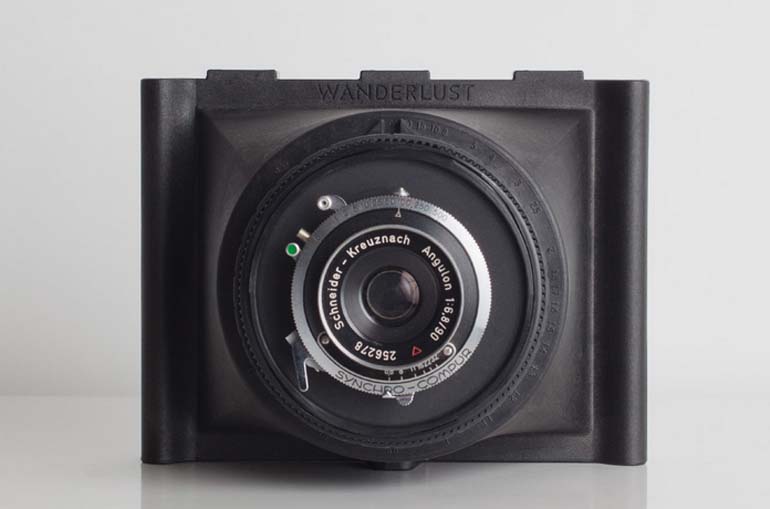
The Travelwide, due for release Summer 2014, weighs just 275 grams making it lighter than a DSLR and the lightest 5×4 ever made.
It has an impact-resistant glass-filled ABS construction with a high-precision focusing screen from 0.55m to infinity using the Schneider Angulon 90mm ƒ/6.8 lens (not included).
There are three accessory shoes to mount bubble levels, rangefinders or viewfinders and a standard tripod mount.
The camera has a guide price of $149 and comes with a metal sport-finder and a Pinwide pinhole lens.
It accepts standard 5×4 film holders and Polaroid 545i holders
More info at Wanderlust Cameras
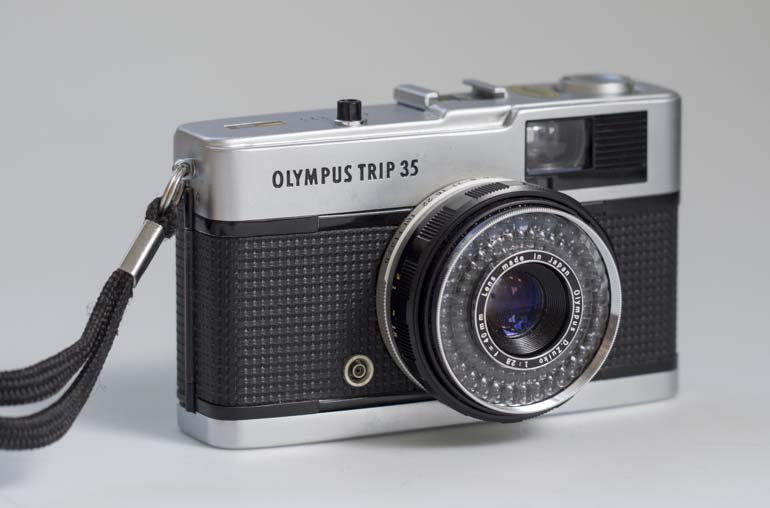
The Olympus Trip 35 is a 35mm metal bodied point & shoot compact camera that was produced from 1967 to 1984. In the 70s Olympus created an advertising campaign that featured British fashion photographer David Bailey. While famous in photography and fashion circles, he became a household name thanks to that campaign. People would say “I’m no David Bailey” when being asked about their photography.
The Trip 35 looks like a rangefinder camera but is a much simpler design. Its Zuiko 40mm f/2.8 lens has four elements in three groups and just four zone focusing settings.
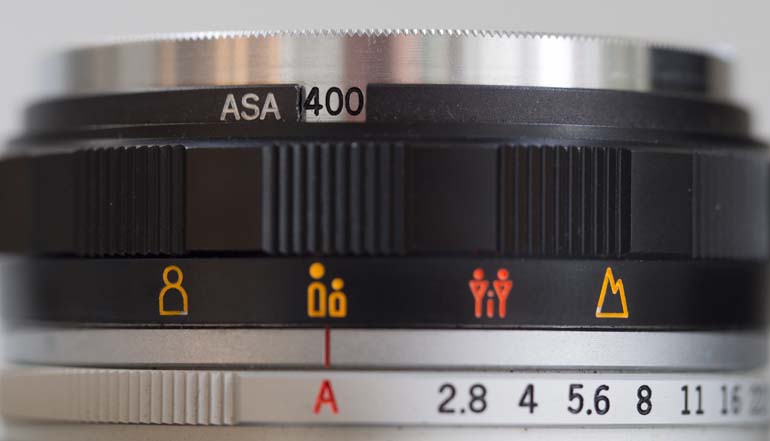
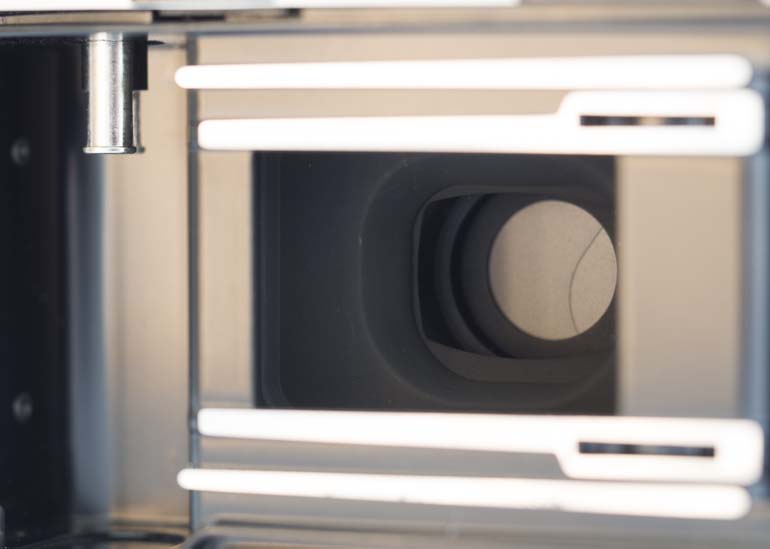
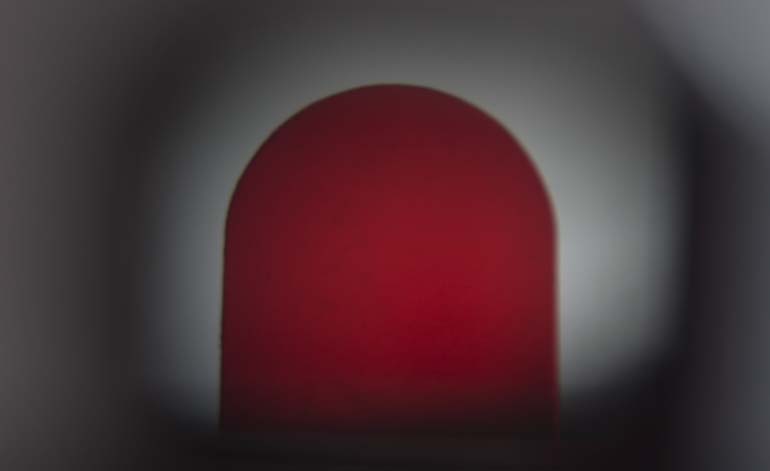
The exposure system is fairly basic too. A solar-powered selenium light meter around the lens provides a program auto exposure system when the camera is set to the ‘A’ mode. No batteries are required. It automatically sets 1/40th sec or 1/200th sec shutter speed and an aperture from f/2.8 to f/22. If the light levels are too low the shutter locks and a large red warning marker pops up in the viewfinder. Turn from the A setting and you have a manual option at all aperture ranges.
The camera has a flash PC sync socket along with a hot shoe and syncs with flash at 1/40sec. There’s an ISO range, set on a dial at the front of the lens, from 25 to 400 which at the time covered all the main film options.
It’s a great camera for point and shoot photography, solidly made and considering the price a very respectable performance with a sharp Zuiko lens. There are many available on the second hand market…eBay has dozens for sale at any one time, and you can usually find them at car boot sales and second hand dealers.
There are a few things to check before buying an Olympus Trip 35
The Trip 35 had a common fault with the meter. To test this rotate the film advance winder to cock the shutter, set the camera to A and hold your hand over the lens to block out the light. If the camera is faulty the shutter will fire. If it’s ok the red warning indicator will appear in the viewfinder and the shutter button will not press down.
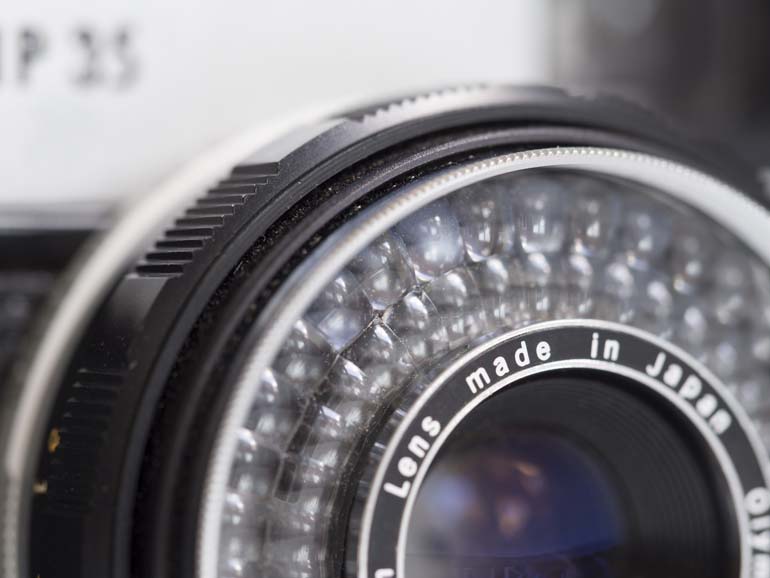
Check the lens hasn’t got fungus in it. Angle it in the light or shine a torch into the lens and look for small patches of veins on the surface of the elements.
Look at the foam light seals inside the camera film chamber. It’s not a major issue if they are crumbling, replacements can be bought, but this will put up the overall cost. 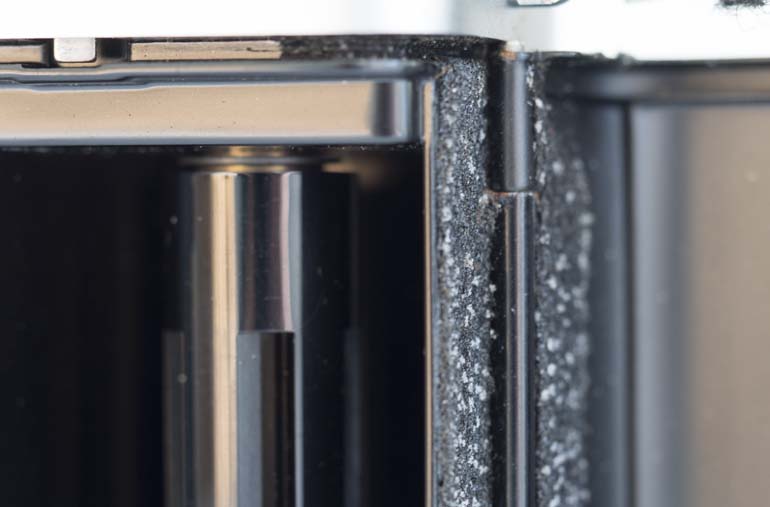
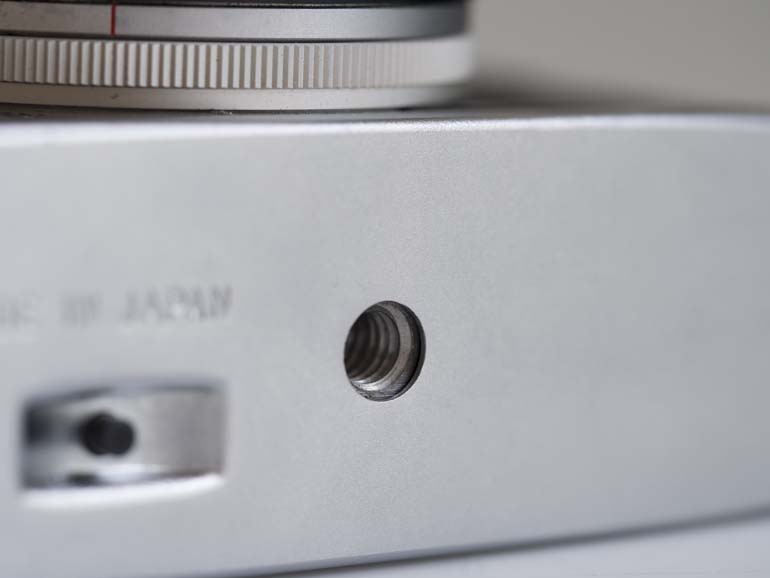
Check that the screw heads aren’t worn as that would indicate the camera has been repaired, by someone who’s less competent. Also make sure the tripod thread isn’t damaged.
Adjust the manual aperture setting and press the shutter release down. The lens aperture should go progressively smaller as you adjust from f/2.8 to f/22.
Try a flashgun attached via the PC socket and hot shoe to test both these connections.
How much to pay for a Trip 35
You can pay anything from a couple of quid to £60 for one of these Olympus Trip 35 cameras. A typical price for a good condition one is about £30-£40. They used to sell new for a similar price. Some photographers are buying them to refurb with a new skin, replacing the black plastic trim for wood veneer, leather or snake skin. These tend to resell for the higher prices, but look gorgeous.
You can buy the Olympus Trip and other 35mm film compact cameras and SLRs from the PhotographyAttic’s Used and second hand 35mm Cameras for sale page
In the last article we showed you how to make a custom slide duplicator for 35mm negatives and transparencies. And the first problem you will encounter when you start scanning your colour negatives is how to convert the result to a positive digital file.
When you use a proper film scanner it has built in settings that convert the negative to positive automatically, but the digital files from a slide duplicator look just like the original – negative image with an orange colour.
We’ll not go into the colour – you can find all those technical details here: Why is colour negative film orange?
You may think it’s simply a case of pressing the invert button in your image editing software. That does make the photo look positive, but the orange inverts to a blue colour and that needs fixing.
Here’s how I process photos in Lightroom. You can do similar with most image editing programs.
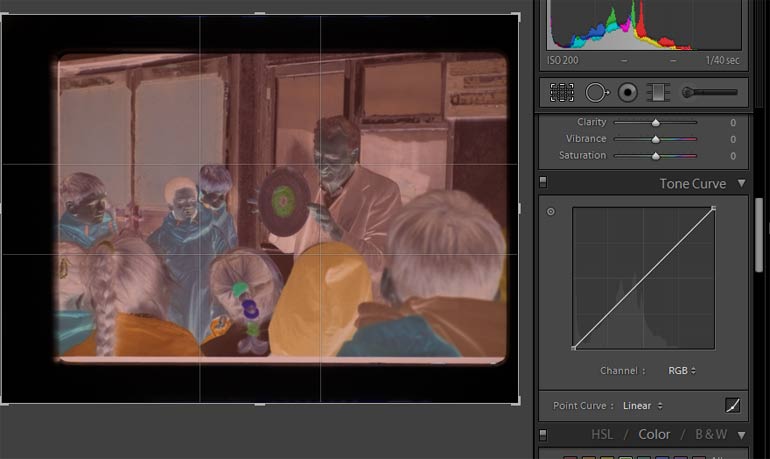
Below is the imported negative in Lightroom. Scroll down to the tone curve. Notice the line in the graph goes from bottom left to top right.
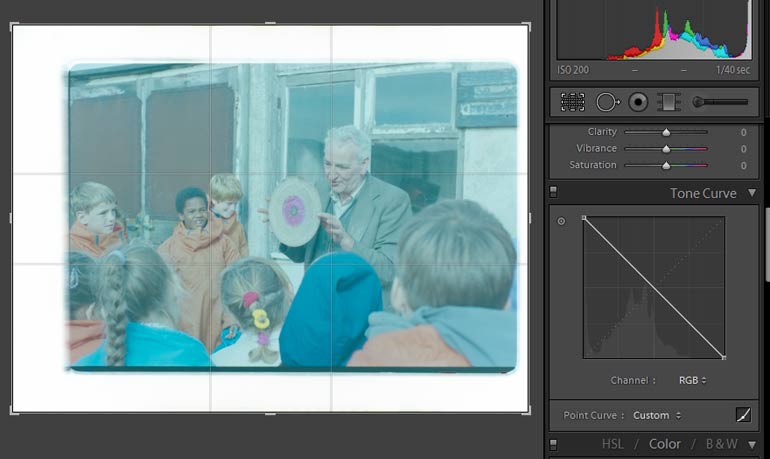
Click on the bottom left corner and drag to top left, then click top right and drag to bottom right. This inverts the image – notice the blue cast.
Using the WB dropper click on a neutral part of the image to adjust the white balance. I chose the black hair of the boy facing us. This makes the colours more natural. Now adjust the tone sliders to beef up contrast darken shadows and brighten highlights.
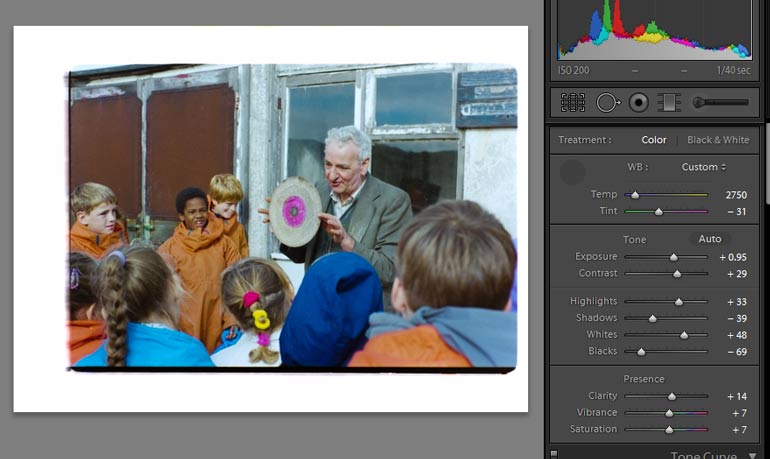
The result is a fairly good conversion of your digital negative
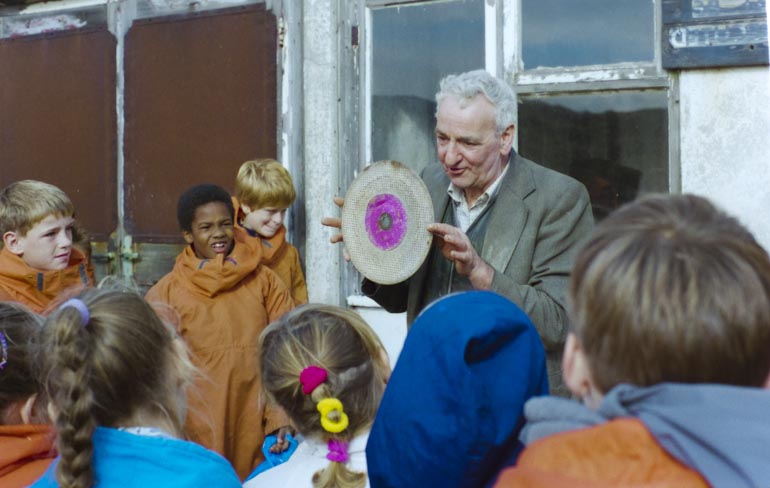
If you’ve moved over to digital from film, chances are you will have a collection of film based photographs – either negatives or transparencies. If you don’t have a film scanner you can use your digital camera to digitise these old films.
I decided to do that using my Olympus OM-D. The problem I had was that the usual slide copier, such as the Aico Zoom Slide Duplicator or similar products from the likes of Jessop, Ohnar and Kenlock, is that they were designed for full frame cameras. So when the copier is mounted onto an OM-D (using a T2 mount and Adaptor from Micro 4/3 to T2 camera fitting) the image is cropped and you can only copy the centre (or edge if you adjust the frame position). You cannot copy the full frame.
An alternative is to make your own copier. I dug out the Tamron 90mm f/2.5 macro with Pentax K Adaptall 2 attached, and mounted it on the Olympus body using a micro 4/3 to Pentax Adaptor.
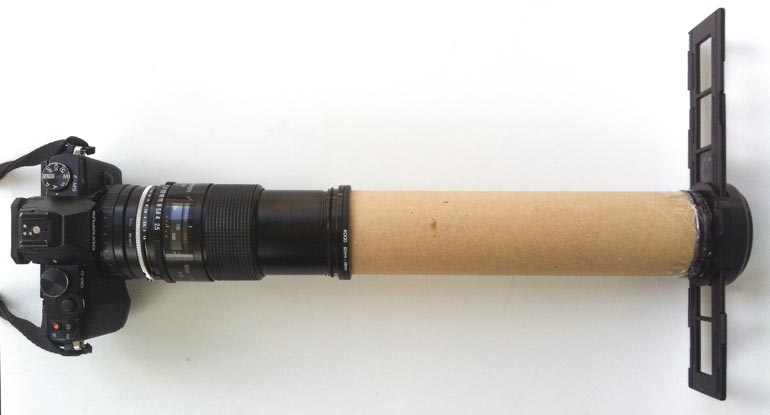
Any macro lens with 1:1 capability will be suitable. Attach the macro lens, turn the camera on and move the slide away from the lens until it comes into focus on the camera’s LCD. This give you a rough indication of position needed for the slide/negative.
Cut a piece of tubing (postal tubes are perfect) to the necessary length. Now find a way of attaching the tube to the lens. I used a combination of stepping rings from the 55mm of the Tamron lens up to 58mm which was the external size of the tube. The tube squeezed into the inside of the ring and locked in place. If this hadn’t worked I would have super -glued a 55mm Cokin series A adaptor to the end.
You can now position the slide negative at the other end of the tube. A budget option is to use Blu Tack to hold the slide frame on the front. You could mount negatives in a frame too. As I have a lot to copy I decided to take off the carrier part of the Aico Zoom Slide Duplicator and mount that on the front of the tube. This ensured a faster throughput of film.
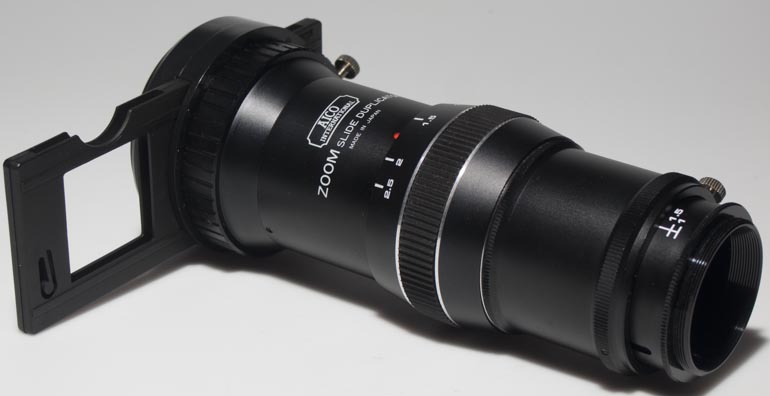
The carrier has three small screws holding it in place on the duplicator. These can be loosened so the whole front section slips off. Don’t unscrew fully as the screws are tiny and fiddly to get back in.
With the custom duplicator assembled it’s time to get to work copying. You can use a household lamp as backlight illumination, or a flashgun, or sunlight. You need to diffuse the light so it’s even across the film surface. The slide duplicator carrier has a diffusing plate built in. If you’re just mounting the slide on the front of the tube put a sheet of white cloth, or several layers of tracing paper in between the film and light source.
Use the camera’s zoom focus magnifier if it has one to focus accurately, making sure the film is centered in the frame and not cropped at any edge. Adjust exposure using the LCD as a gauge. Do a few test shots to check focus, framing an exposure before rattling through your library.
In the next article I will explain how to process the copied negatives. How to process scanned colour negatives
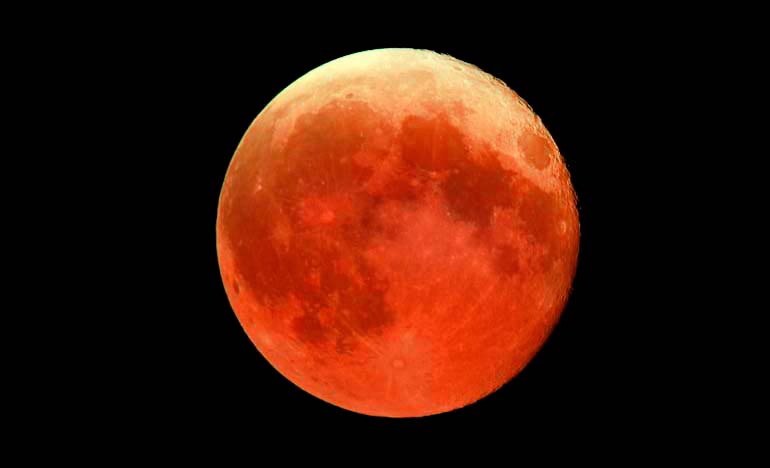
On the 15th of April you’ll be able to photograph the first of four total lunar eclipses. They’re sometimes referred to as blood moons, because of the colour the moon becomes as the eclipse takes place.
You;ll need a camera with a fairly long lens (unless you crop later in an image editing program) and a tripod to keep it stable. You also need to set the camera to manual exposure or the moon will be over exposed. There’s a full article here: How to Photograph the moon.
3D printing could be the photographer’s savior. These clever devices print from 3d map files using resin or powder that’s built up in layers to form complex shaped objects. These printers cost thousands of pounds a few years ago, but now you can pick up a home printer such as the CTC 3D Printer (below) on eBay for less than £600.
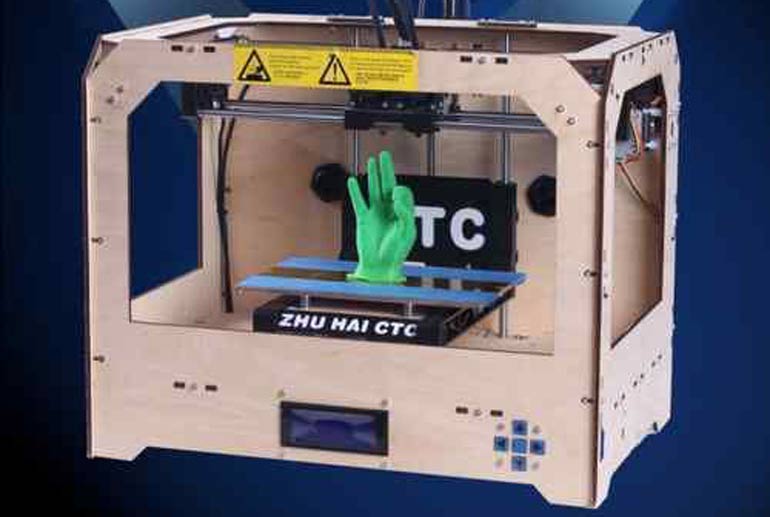
And as the popularity increase so does the resources to help you print.
For most the biggest stumbling block will be the design and creation of a 3D printable file, but help is at hand – online specialist forums are growing where members share plans. There’s even a special site called thingverse.com where projects are posted along with photos, illustrations, plans and tips from the creators.
Photographers will benefit because you may have lost a cap or cover for your camera or lens, need an adaptor to convert from one lens fit to another, or a bracket to hold a flash or accessory. All these, and things that have never been invented, can be printed.
Here at PhotographyAttic we hold stock of many obscure camera accessories and photography items that haven’t been manufactured for decades. Our stocks are limited, but the 3d printer will provide an alternative .
On thingiverse there’s already a Quick release system for a tripod
along with various camera adaptors and body caps such as this Canon body mount for EOS camera
There are brackets for go-pro cameras, stands for taking mobile phone selfies and even cameras such as this 120 format pinhole camera
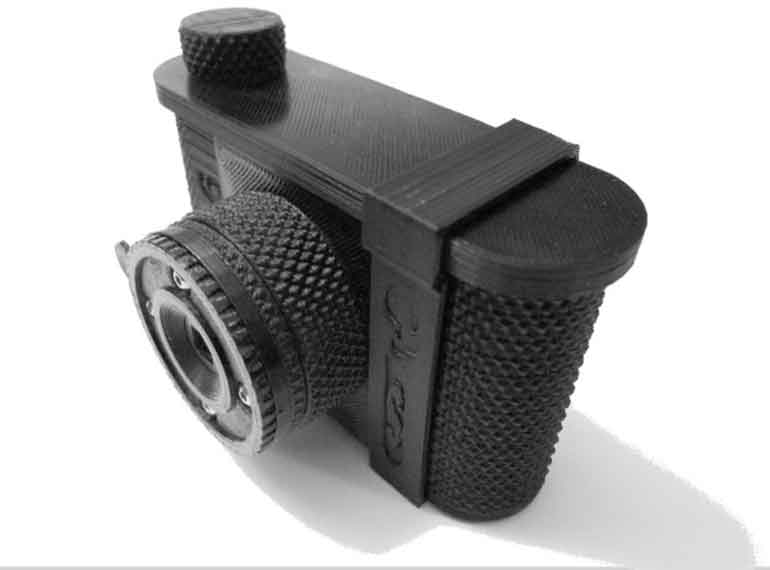
The current cost is still too high for many of us, but prices will inevitably fall and I bet it wont be long before the 3D printer is under £300 and many households will be printing replacement remote control battery covers, parts for toys, ornaments etc. And photographers will become part time inventors. The future is interesting!
Wildlife photographers often wish they owned a longer lens of 500mm or so to taking close ups of birds and other smaller creatures. And often they may already have such a lens in the form of a spotting scope. By attaching the camera to the rear end of the spotting scope you create a lens with a similar magnification to that of around 800mm
This technique is referred to as digiscoping.
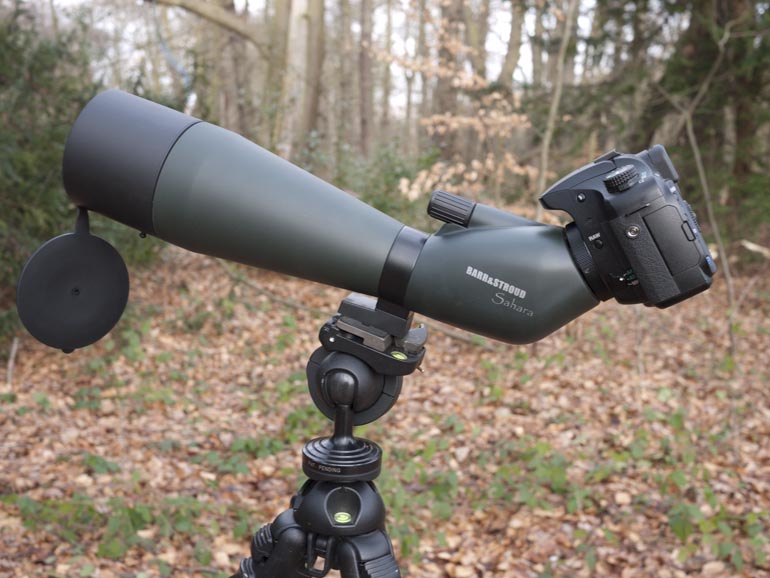
You need to buy an adaptor to attach the camera to your spotting scope. These are often specific to the spotting scope and with the exception of a few
camera brand adaptors, they usually all have a T2 mount thread at the camera end. So you buy the adaptor, attach it to the scope and then screw in a T2 adaptor that’s specific to your camera mount. We have the T2 camera mounts here at PhotographyAttic
Camera specific scopes such as the Pentax PF80D need the PF-CA35 which has a direct camera mount.
The Nikon Fieldscope range including the EDIII A need the FSA-L1. Nikon also produce the FSA-L2 for exclusive use on EDG Fieldscopes
Opticron have a wide range of scopes and several adaptor combinations all requiring a T2 mount at the camera end. See the Opticron Telephotography and Digi-scoping page for more details
Swarovski also have a range of scopes and a really informative page on digiscoping: Equipment – spotting scopes, cameras, etc. You need a T2 mount with their systems
Barr & Stroud supply a spotting scope adaptor for their Sahara and Bresser Safari spotting scopes. T2 mount required. This adaptor also fits some Helios, Bresser, Meade and Praktica spotting scopes.
Leica’s DSLR Photo-adaptor allows T2 mounted SLRs to be attached to the Leica Spotting scopes
T2 adaptors do not have any form of electrical contacts so you have to use your camera’s manual or aperture-priority mode. As the spotting scope doesn’t have apertures you just point and shoot and the camera will set the correct shutter speed. You could use the ISO setting to adjust shutter speed and increase the ISO for a faster shutter speed.
Focusing is manual. Focus the scope like you normally would but take more care on accurate point as the lack of depth of field will mean you have to be spot on to get a sharp photo. Also the increased magnification will make it difficult to hand hold so it’s better to use a tripod.
Further reading
Peta Pixel have an interesting article comparing the use of a Spotting scope against a Canon Super telephoto
In this occasional series we’ll take a look at design concepts that have tried to revolutionize the way we take photos. The first in the series looks at digibinos. A hybrid product combining binoculars with a digital camera. Pentax came up with the innovation announcing their DB-100 model in March 2002.
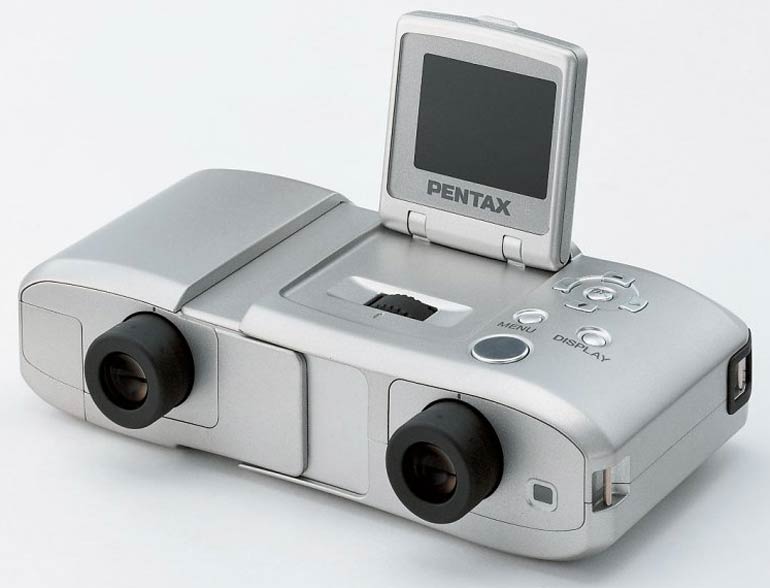
Having a camera combined with binoculars wasn’t a new thing. Tasco produced a 110 film version back in the early 80s. It wasn’t a success, and neither was the Pentax .
What the Pentax had was interesting – a pair of 7x magnification binoculars and a digital camera with a focal length of 280mm (on a 35mm camera). What let it down was the low resolution of the camera at just 0.8Mp and the build quality. For £300 it felt like you were getting a cheap digital camera with a budget pair of binoculars that didn’t have the flexibility of normal compact binoculars. You could adjust the size for different width eyes by push pulling the case, but they didn’t feel as comfortable as ordinary binoculars.
The LCD viewing screen was also smaller than digital cameras at the time.
I was taking photos remotely the other day and used binoculars to view the distant scene. It made me think that having a camera built in would be a good thing…but I’d want the clarity and depth seen through the binoculars to be recorded by the camera. I still believe there’s a future for this kind of hybrid technology, but it has to be smarter than the previous attempt.
Illitt Vintage collects and restores vintage rangefinder cameras, replacing their original leather trims with beautifully crafted wood veneers. Veneers are made from Mansonia, Mahogany, Walnut and Cherry, each one being uniquely patterned to ensure each camera is equally unique.
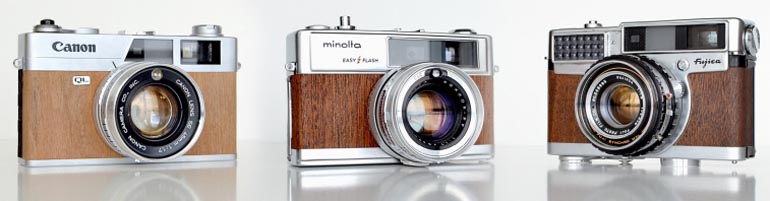
The cameras look gorgeous and models restored so far include an Argus C3, Canon Demi EE17, Canonet QL17, Fujica V2, Konica Auto S2, Konica SII, Minolta AL, Minolta Hi-Matic 7, Minolta Hi-Matic 9 and Minoltina AL-S.
Once restored the cameras are used by Illitt Vintage and results are displayed in their online gallery. Cameras are made available for sale too along with some stylish camera straps. Ilott Vintage Store
Photographyattic has a few vintage cameras here if you fancy trying your own DIY restoration project 35mm Cameras for sale
Try using other materials such as leather or soft plastic.