Category: Filters

  • Hoyarex Filter System Guide

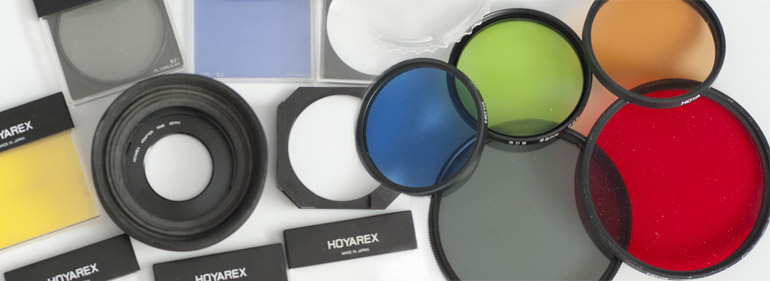
    Hoyarex filters were arguably the best filter system made. Optically superb, several made from glass, solid filter holder, brilliant adjustable rubber hood for wide or super telephoto, and a useful range of filters.
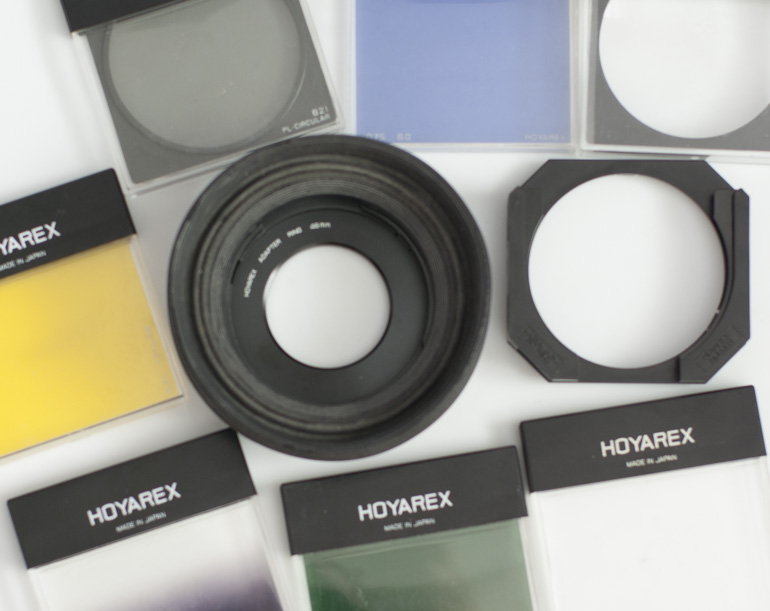
    hoyarex filter system

    Hoyarex was a filter system developed by Hoya. Hoya was the big name in optical filters and then French manufacturer Cokin appeared with a system that would revolutionise the filter world.

    Hoya reacted fast but not fast enough. Cokin had soon taken hold of the filter market with serious and special effect filters. Photographers were no longer buying one or two filters they were investing in cases full.

    The Hoyarex system emulated what Cokin had done, but in our opinion did it better, some filters were glass, others had frames around them so handling was better. The holder was more flexible and had a more versatile lens hood. The filters slotted in more comfortably and the adaptors clipped in easier.

    But they were too late and Cokin won the battle. Hoyarex disappeared as quick as they came.

    You can still find remnants of the system sold in the second-hand sections of various photographic retailers, and there are many here on PhotographyAttic.

    The illustration above shows the filter holder with an adaptor ring (available in sizes from 43mm up to 77mm) and the wonderful rubber Pro hood that clipped on the holder and had a variable extension.

    Two filter holder can be clipped together and rotated when special effect filters were inserted.

    Here in numeric order is the entire range with links to buy individual used filters at photographyattic.com

    Filter model More info Buy
    Hoyarex 011 Skylight 1B Skylight 1B Hoyarex 011
    Hoyarex 021 UV UV Filters Hoyarex 021
    Hoyarex 031 Sepia Hoyarex 031
    Hoyarex 041 Yellow Hoyarex 041
    Hoyarex 042 Orange Hoyarex 042
    Hoyarex 043 Red Hoyarex 043
    Hoyarex 044 Green Hoyarex 044
    Hoyarex 052 NDx4  ND Filters Hoyarex 052
    Hoyarex 061 81 Warm Hoyarex 061
    Hoyarex 065 85 Orange Hoyarex 065
    Hoyarex 071 82 Blue Hoyarex 071
    Hoyarex 075 80 Blue Hoyarex 075
    Hoyarex 081 FL-Day Magenta Hoyarex 081
    Hoyarex 121 Soft Spot Hoyarex 121
    Hoyarex 131 Soft Spot G (Grey) Hoyarex 131
    Hoyarex 132 Soft Spot B (Blue) Hoyarex 132
    Hoyarex 136 Mist Spot E Hoyarex 136
    Hoyarex 138 Mist Spot O Hoyarex 138
    Hoyarex 139 Mist Spot R Hoyarex 139
    Hoyarex 152 Splitfield Hoyarex 152
    Hoyarex 161 Technical Mask Hoyarex 161
    Hoyarex 162 Black Plain Mask Hoyarex 162
    Hoyarex 171 Vignetter Hoyarex 171
    Hoyarex 181 Double Mask Hoyarex 181
    Hoyarex 182 Dual Image Hoyarex 182
    Hoyarex 212 Fog 2 Hoyarex 212
    Hoyarex 216 Fog Half Hoyarex 216
    Hoyarex 222 Diffuser 2 Hoyarex 222
    Hoyarex 242 Softener (A) Hoyarex 242
    Hoyarex 243 Softener (B) Hoyarex 243
    Hoyarex 324 Star 4 Hoyarex 324
    Hoyarex 326 Star 6 Hoyarex 326
    Hoyarex 328 Star 8 Hoyarex 328
    Hoyarex 413 Multivision 3 Hoyarex 413
    Hoyarex 415 Multivision 5 Hoyarex 415
    Hoyarex 521 Gradual G2 Hoyarex 521
    Hoyarex 522 Gradual B2 Hoyarex 522
    Hoyarex 523 Gradual T2 Hoyarex 523
    Hoyarex 524 Gradual M2 Hoyarex 524
    Hoyarex 525 Gradual P2 Hoyarex 525
    Hoyarex 526 Gradual E2 Hoyarex 526
    Hoyarex 527 Gradual Y2 Hoyarex 527
    Hoyarex 611 Linear Polariser Hoyarex 611
    Hoyarex 621 Circular Polariser Hoyarex 621
    Hoyarex 702 Diffraction 2x Diffraction filters Hoyarex 702
    Hoyarex 704 Diffraction 4x Diffraction filters Hoyarex 704
    Hoyarex 708 Diffraction 8x Diffraction filters Hoyarex 708
    Hoyarex 718 Diffraction 18x Diffraction filters Hoyarex 718
    Hoyarex 736 Diffraction 36x Diffraction filters Hoyarex 736
    Hoyarex 748 Diffraction 48x Diffraction filters Hoyarex 748
    Hoyarex 799 Diffraction Halo Diffraction filters Hoyarex 799
    Hoyarex 811 +1 Hoyarex 811
    Hoyarex 812 +2 Hoyarex 812
    Hoyarex 813 +3 Hoyarex 813
    Hoyarex 814 +4 Hoyarex 814
    Hoyarex 911 Gelatine Filter Holder Hoyarex 911
    Hoyarex 912 Universal holder Hoyarex 912
    Hoyarex 921 Lens Shade Hoyarex 921
  • UV Filter Guide

    UV Filter
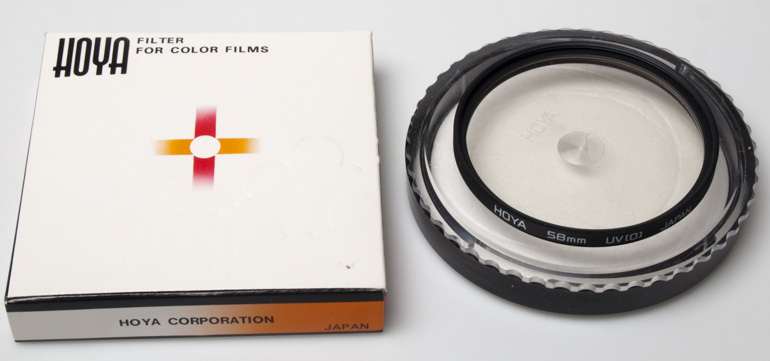
    The Multi-purpose UV is similar to the skylight, absorbing the ultraviolet rays which often make scenic shots hazy and indistinct. Moreover, the UV, especially when used with black & white film, increases contrast, reduces haze and generally improves the “sharpness” of your photographs

    Many photographers buy a UV filter for each lens and leave them screwed on to protect the lenses’ front elements.

    UV filters are available in round type that screw into the lens in ever size imaginable.

    UV Filters available here

    They were also made by Hoyarex for their square filter system.

    Links to buy
    Hoyarex 021 Filter

  • What is a Neutral Density filter?

    The Neutral Density (ND) filter is one of the more useful filters you could include in your collection. Digital image processing can do many things but it can’t reduce the light reaching the film or CCD. That’s the job of the camera’s exposure system and an ND filter throws in a helping hand.

    Neutral Density Filter

    The name explains its purpose. It’s neutral (in colour) and it has a density (level of opaqueness).

    Neutral Density filters come in a range of densities. The basic ND2 has a 2x exposure factor (or one f/stop) and an ND4 has 4x (two f/stops). There’s also an ND8 (8x or three f/stops) and a less common ND64 (64x or six stops).  You can go even further with specialist ND filters such as the Big Stopper from Lee Filters. This one has ten stops light reduction. So a shutter speed of 1/30sec would need to be increased to 30 seconds!

    The filter goes over the lens and reduces the light reaching the film by the exposure factor of the filter.

    If, for example, you had an exposure of  1/125sec at f/11 and you added an ND8, the shutter speed would reduce to 1/15sec or the aperture would need to be opened to f/4.

    The reason to use an ND filter suddenly become obvious. If you want to force a slow shutter speed, for motion blur, or you want the lens at the widest aperture, for shallow depth-of-field, the ND filter can help.

    It can also be used in combination with a flash to effectively reduce the guide number for close range photography.

    The ND2 is hardly worth bothering with so we’d suggest you’re first ND filter be a ND4.

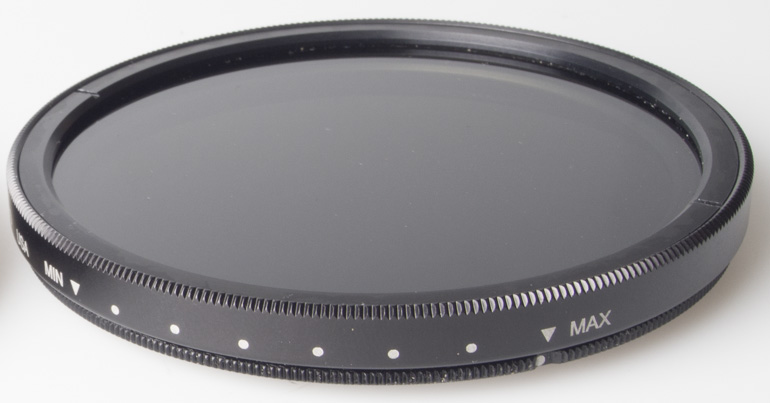
    And another interesting type is the variable ND, like the one illustrated above. These are variable in strength, but, as reviewers have found, tend to cause criss-cross patterned illumination at stronger settings.

  • What are Wratten filters?

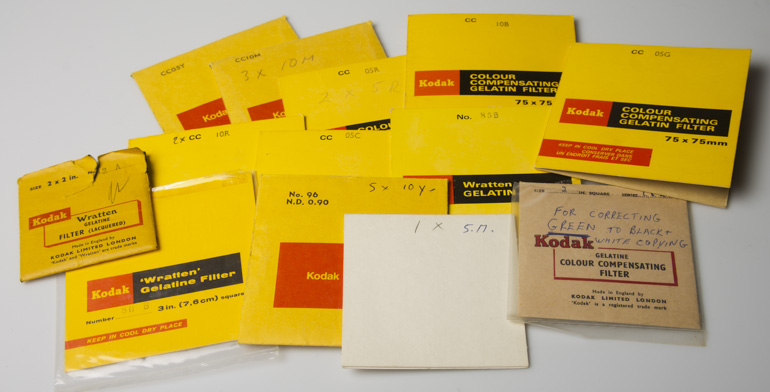
    Wratten is a brand name from Kodak used for their series of coloured gelatin correction and conversion filters.

    Kodak wratten filters

    There’s a wide range – each one identified by its Wratten number.

    The filters are very thin so are optically very good, but can be easily damaged

    Wratten filters can be held or taped in front of the lens (or flash). Alternatively you can buy a gelatine filter holder for most filter systems for a neater way to attach the filter to the lens. Example include the Hoyarex Gelatine Filter holder and the Cokin P-Series Gelatine Filter Holder

    They are also used in the darkroom for colour printing using an enlarger with a filter drawer. Cyan, Magenta and Yellow are available in increments of 5CC. Owners of the Bowens Illumitran and other similar professional slide copiers can use the filters to correct colour casts when copying from one film to another.

    Photographers can tape a wratten filter over their flash and have a cancelling one on the lens so anything illuminated by flash will be the correct colour while the background will be the colour introduced by the filter over the lens.

  • 10 essential photography filters

    Optical camera filters

    The top ten filters you should own will obviously vary from person to person and is dependent on the subjects you photograph. Our choice is most definitely the following:

    1. Circular Polariser (glare reduction and colour saturation)
      Great for landscapes, still lifes and architectural photography
    2. Grey Grad 4x (balance sky brightness)
      Great for landscapes
    3. Skylight (protects lens)
      All purpose photography
    4. Neutral Density x4 (reduces overall exposure)
      All purpose photography
    5. 81A (warms up skin tones)
      Perfect for portraits but also useful for landscapes
    6. Close up +4 (for the macro shots)
      Ideal for nature also good for still lifes
    7. Grey Grad 2x (a weaker variation on 2)
      Great for landscapes
    8. Neutral Density x8 (a stronger variation on 4)
      All purpose photography but idea for blurry  waterfalls
    9. Softar style diffuser (best softener for when you cant be bothered doing it in Photoshop)
      Perfect for wedding and portraits
    10. Star 8 (Adds star burst)
      Great for jewellery, also interesting for landscapes

    Good selection? Let us know your favourite filters and what you use them for

    Load of camera filters for sale

  • Circular or Round filters?

    Many new filter buyers are unsure whether to buy a round filter or one of the many square options.

    system filters or round?

    A round filter screws directly onto the front of your lens. A Square filter slides into a filter holder that has an adaptor ring matching the filter thread size of your lens.

    There are a few advantages and disadvantages to consider.

    Cost
    The main advantage with a filter system, using a filter holder is that you only need one filter for a number of lenses. You just need to change the adaptor ring so the filter and holder will fit on to a different lens. Once you’ve bought the adaptor and ring system filters tend to be less expensive.
    + System Filters

    Space
    This not only means it’s a lower cost when you have a selection of lenses, but you also save space. Imagine wanting five different filters and you have four lenses with different filter thread sizes. You’d need 20 filters in total! Well this is not exactly true as you can buy step up or step down rings to change the size of the lens’ filter thread.
    + System Filters

    Quality
    Screw in filters are often better quality. They’re usually made of glass and of the highest optical quality. Being glass they don’t scratch easily either, so are easier to clean without damage.
    + Round Filters

    Size
    Screw in filters tend to take up less room as there’s no holder required. They are less protruding on a lens too so there’s less chance of vignetting (caused by the filter obstructing the corners of the frame).
    + Round Filters

    Design
    The filter holder type of filter design usually means there’s a gap between the lens and the filter. This not only potentially reduces quality as light has more complicated path to follow, but also means the lens could be exposed to the elements more.
    + Round Filters

    Range
    Although there are plenty of screw-in filter options you won’t get a wider range than a system filter, especially in the more creative options.
    + System Filters 

    Practicallity of use
    If you intend using graduated filters you can’t beat the slot in system as you have the option to move the gradient up or down in the holder, whereas a screw in filter has the gradient fixed across the middle.
    + System Filters

    Fiddly
    Screw in filters stand you more chance of cross threading the filter on the lens thread. They are harder to remove if you over tighten too. While system filters need a two step process, so are slower at first while you have to attach the holder then slip the filter in. If, however you can put up with the extra bulk at the front of your lens and leave a filter holder attached the slip in type become far less fiddly.
    + System Filters  

    Resale
    If you decide to sell your filters square ones tend to fetch a better price on sites like ebay.
    + System Filters

    There are many filters are for sale here:
    Cokin A series,
    Cokin P series,
    Hoyarex System,
    Cromatek System,
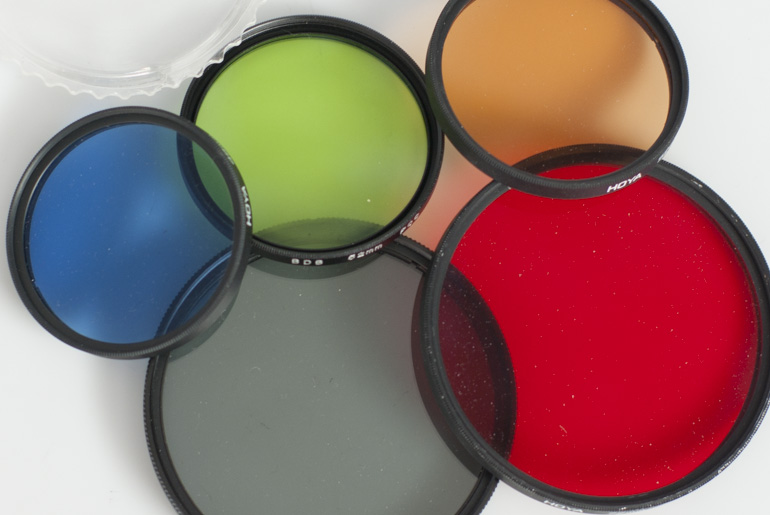
    Round filters

  • Skylight filter – any good?

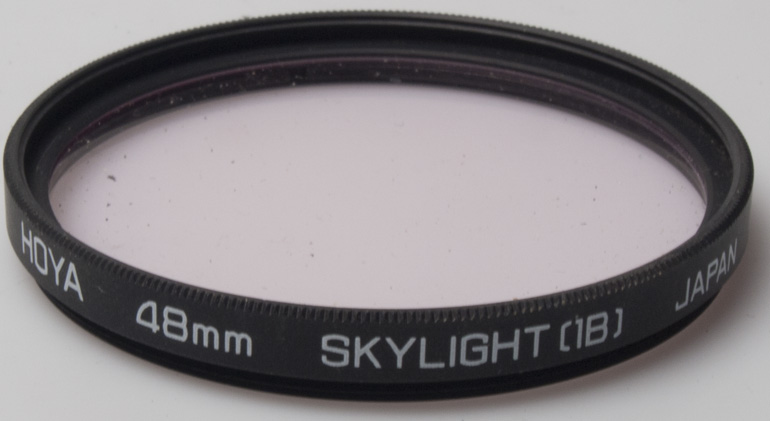
    The Skylight filter has been around for decades and is one of the most popular filters. It has a slight pink tint which is used to reduce blue haze in colour photography.

    When taking colour photographs in bright sunlight, especially by the sea or in the mountains, ultra-violet rays and the brightness of the sky throw out the picture’s overall colour balance.

    Removing any excess bluish tone, improves the overall clarity of the photograph. They also keeps skin tones free of colour reflections from nearby objects such as tree shade. With older film cameras this was very important as it helped restore the film’s natural colour balance. It’s less of an issue with digital as colour casts can be eliminated quite easily in post processing using an image editing program.

    The skylight filter has a slight pink tint

    The Skylight filter does not affect exposure, so some photographers screw one on the front of each of their lenses as protection for the front element.

    There are some photographers who counter this action, suggesting that the filter will degrade quality. And it’s true if you put on a cheapy plastic option, but adding a high quality Japanese multi-coated filter will give minimal degradation to the image.  Any change will certainly not be noticeable to the naked eye.  And the advantage of having a skylight filter (or UV)  is you maintain a clean lens which would cost much more to replace than a scratched filter.

    If you use a skylight filter you can keep it attached all the time, but be careful if you add other filters as the extended depth could cause vignetting on wide angle lenses.  Some manufacturers such as Hoya make slim versions to prevent this.

    Skylight filters are available in two strengths 1A and 1B, the latter being a slightly stronger pink colour.

    Skylight filters are available in round type that screw into the lens in ever size imaginable.
    Round screw in filters available here

    They are also made by Cokin for the square filter system in A and P sizes, and Hoyarex and the likes used to make them for their systems.
    Hoyarex 011 Filter
    Cokin A230

  • Polarizing Filter and cross polarization

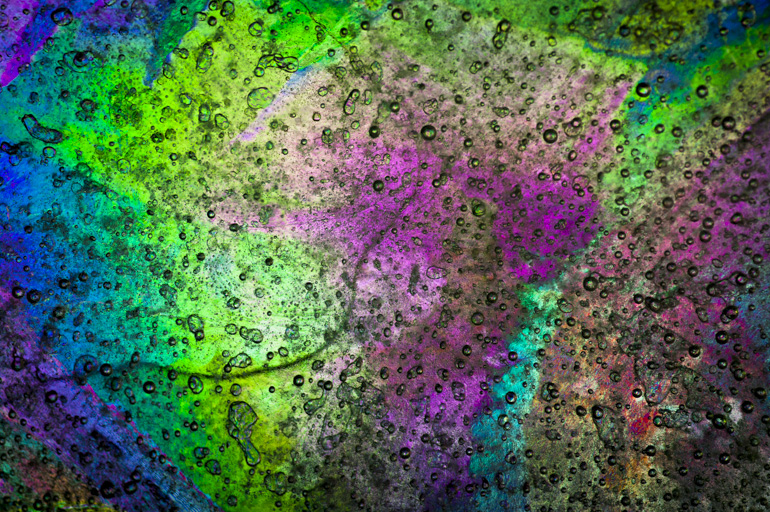
    If you have a computer with an LCD monitor and a camera with a polarizing filter on the lens you can create some really colourful photos like this:

    Cross polarization

    All you do is place a piece of plastic (the above is a cd case with ice on the surface) in front of an LCD screen and photography it using a camera that has a polariser attached to the lens (or held in front of the lens)
    By rotating the filter you can increase the strength (saturation) of colours.

    Try with cd or cassette cases, plastic glass, plastic cutlery, geometry items, filter cases and other similar hard plastic items.
    The patterns revealed show stress in the plastic.

  • Diffraction filters explained

    The diffraction filter is a special effect filter that can be found in a number of filter brands’ ranges.

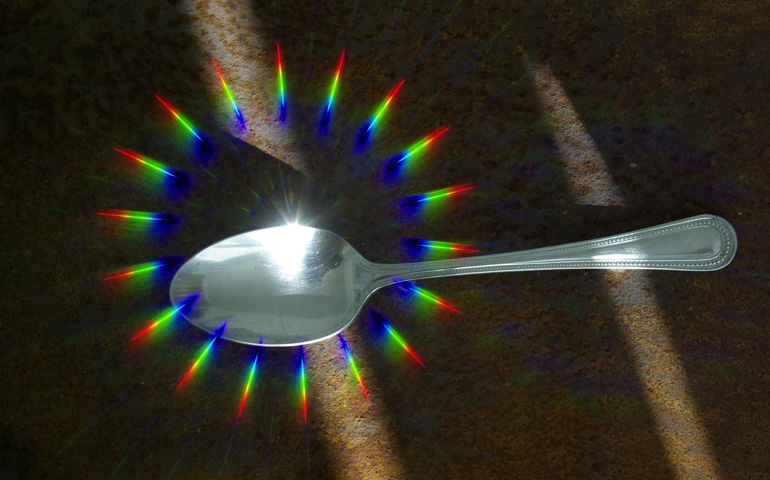
    Diffraction filter The diffraction filter creates spectacular rainbow coloured streaks or star bursts from highlights.

    Hoya made the effect popular back in the 70s with their group of filters called Spectral Star.

    The Hoya Spectral Star is a conventional starburst filter that added a rainbow-like pattern to the streaks. Hoya had three filters in this range

    The Hoya Andromeda is a single line through the photo used to create ghost-like blurs and multicoloured streak from point light sources.

    The Hoya Pulsator is a colourful 8 point star burst.

    And the Hoya Nebula is a multipoint filter for spectacular colour bursts

    The French brand Cokin replicated Hoya’s effects with their series of Diffraction filters which are still available today

    The Cokin Diffractor Cosmos 040 is like the Hoya Andromeda

    The Cokin Diffractor Univers 041 is like the Hoya Pulsator

    And the Cokin Diffractor Galaxy 042 is like the Hoya Nebula

    And thanks to Cokin’s universal holder these filters can easily be adapted to fit a wide range of lens filter thread.

    Hoya copied the system filter approach popularised by their version called Hoyarex.

    The Hoyarex versions are easier to understand as they are named by the number of points. There are also more options to choose from including the following:

    It’s not easy to recreate this filter digitally and is well worth adding to your collection. The filter works with glass, water, jewellery and any other item where you can get a sparkle of light to diffract. Some photographers also use them on lasers to create stunning painting with light effects.