Introduction
The Yasuhara Nanoha X5 is not a conventional macro lens. Most macro lenses provide a maximum reproduction ratio of 1:1 whereas the Nanoha operates at an extraordinary 4x to 5x magnification. At these levels, a subject measuring just 5mm across can completely fill the frame.
The lens allows photographers to capture intricate details in insects, flowers, minerals, electronic components, stamps, coins and countless other tiny subjects. It effectively bridges the gap between traditional macro photography and microscopy.
Key Specifications
● Magnification range: 4:1 to 5:1
● Aperture range: f/11 to f/32
● Optical construction: 10 elements in 7 groups
● Manual focus only
● Built-in LED illumination system
● Minimum working distance approximately 11–19mm
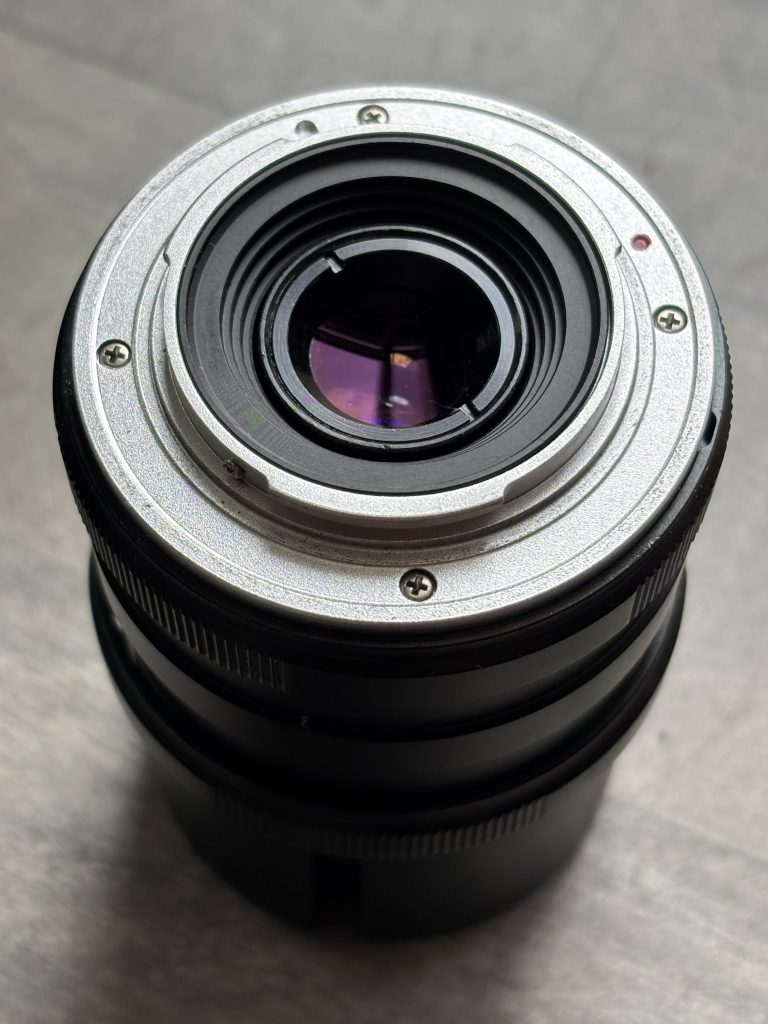
● Metal lens construction
● Weight approximately 310–360g depending on mount version
● Available for several mirrorless camera systems
Build Quality and Handling
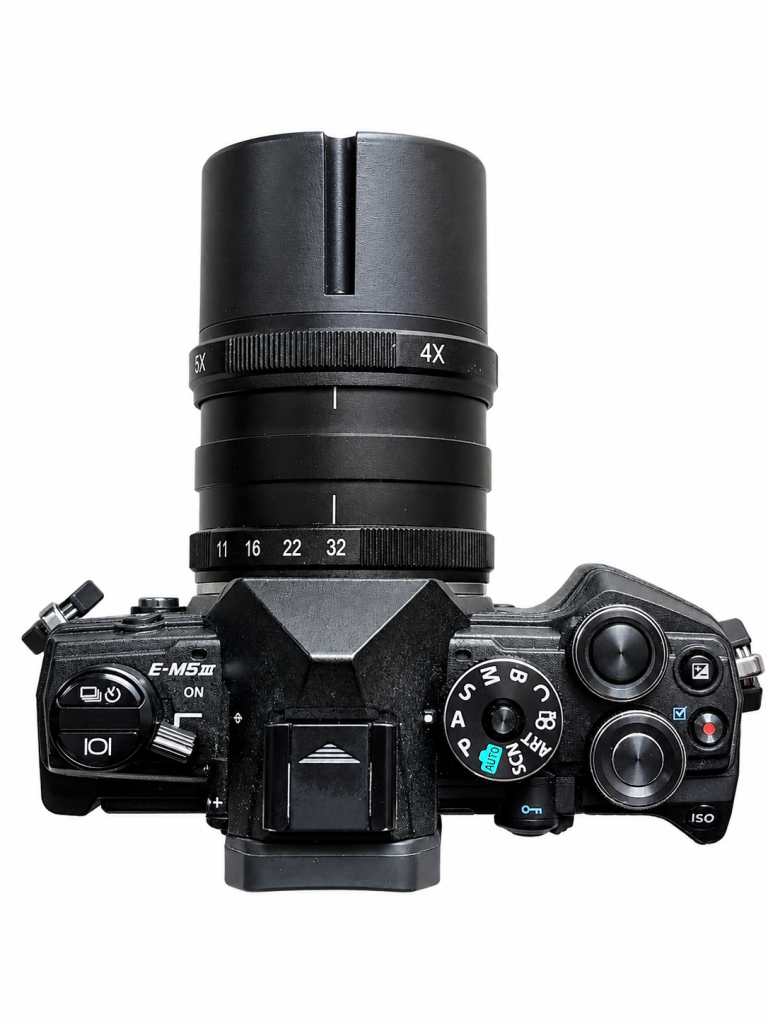
The first impression of the Nanoha X5 is its solid construction with a predominantly metal body and precise controls.
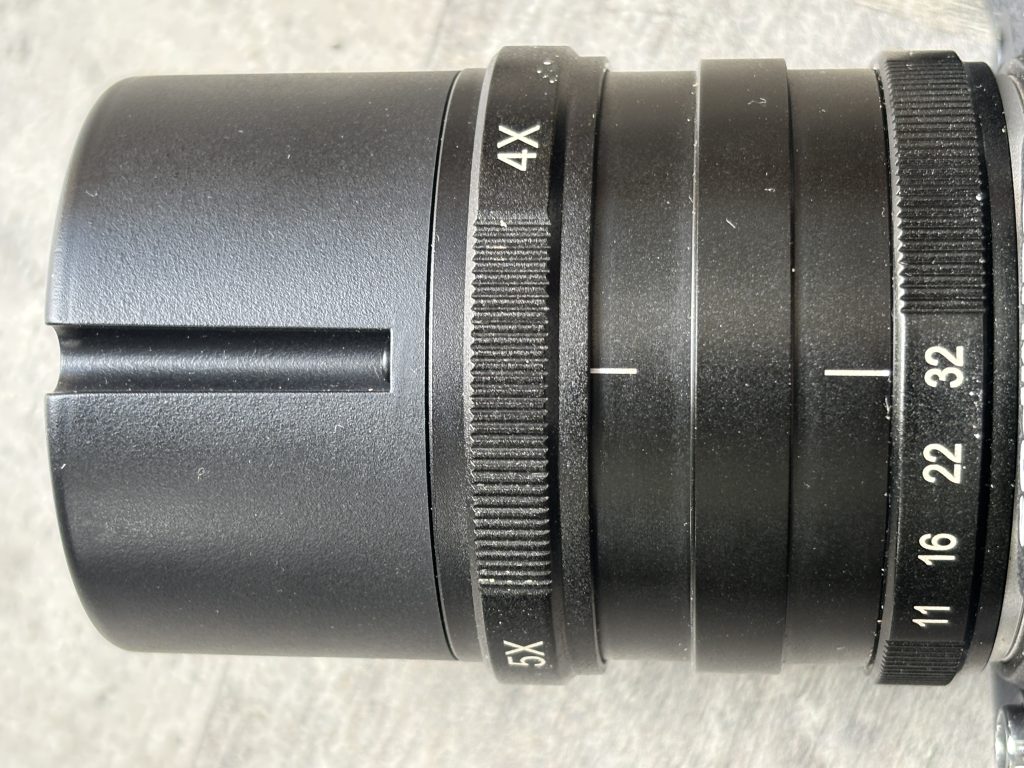
There are only two main controls:
1. A magnification ring that changes reproduction ratio between 4x and 5x.
2. An aperture ring with settings from f/11 to f/32.
The lens is entirely manual. Autofocus would be virtually impossible at these magnifications, where depth of field is measured in fractions of a millimetre.
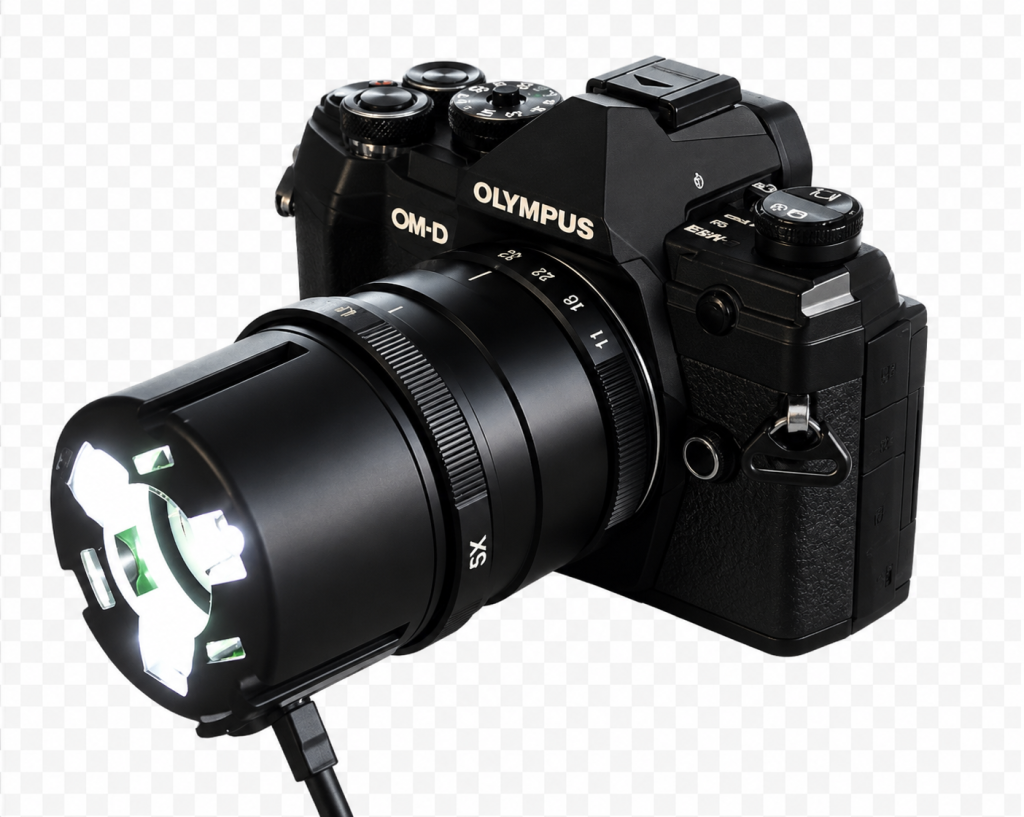
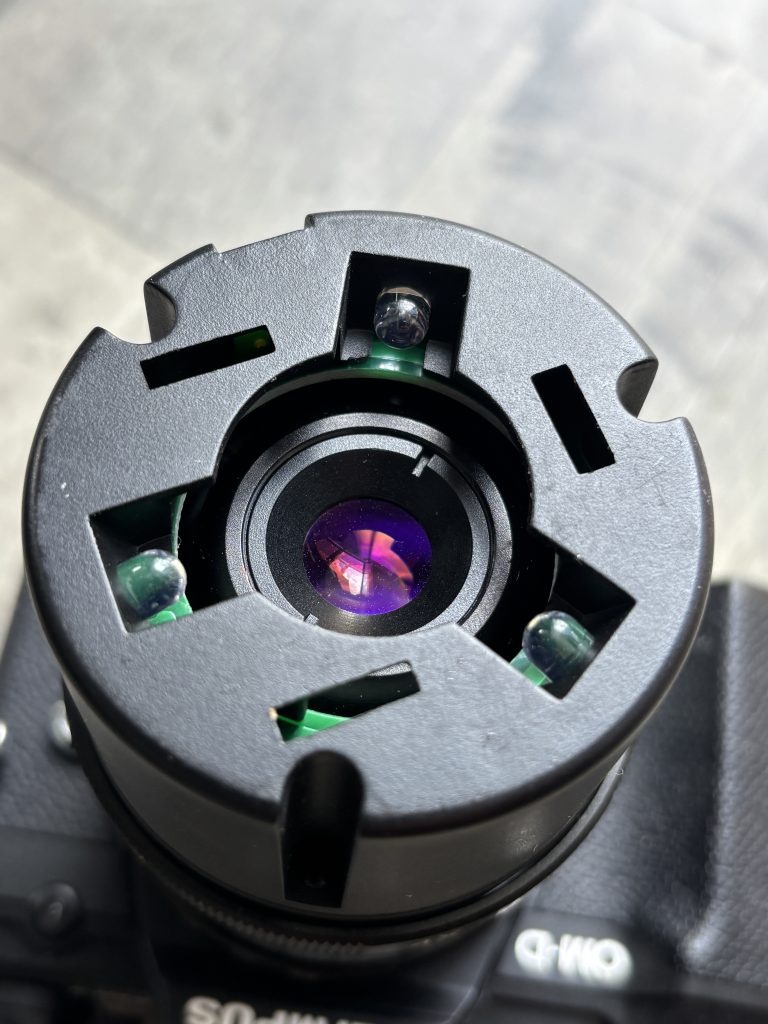
One of the lens’ most distinctive features is its LED lighting system. Three LEDs mounted around the front element provide illumination directly onto the subject powered via a USB cable. This is particularly useful because the lens must be positioned extremely close to the subject, often blocking ambient light.

Understanding 5x Magnification
To appreciate what 5x magnification means, consider a subject measuring 4mm across. At 5:1 reproduction, that tiny object is projected onto the camera sensor at approximately 20mm across.
This level of magnification reveals:
● Individual grains of pollen
● Insect eyes and mouthparts
● Fabric fibres
● Circuit board details
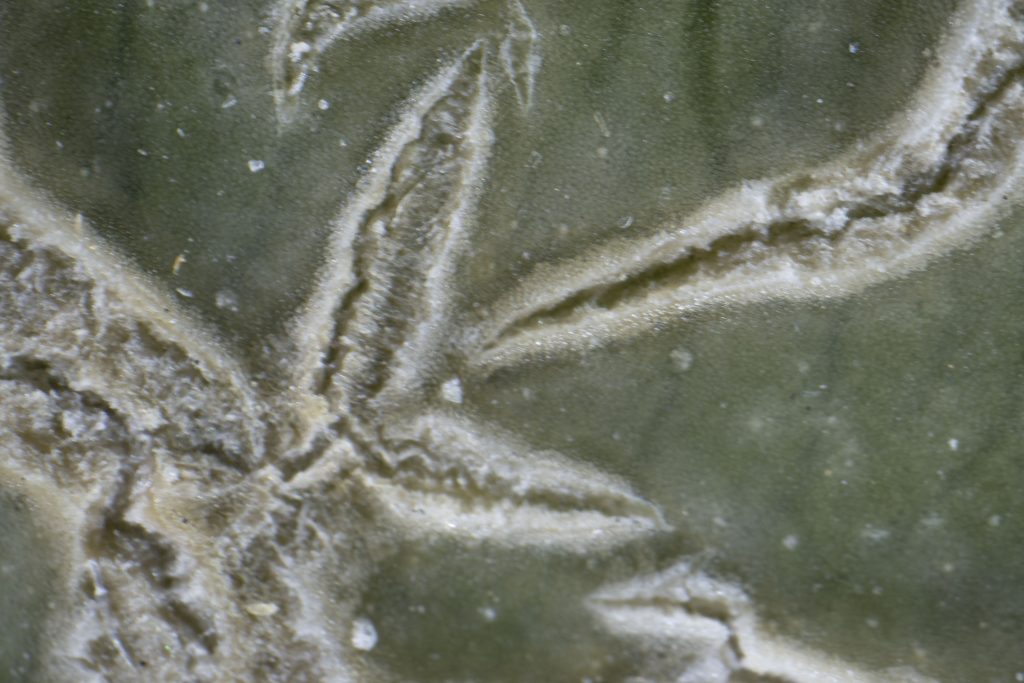
● Surface textures in minerals or, in the example below, the skin of a melon.
● Fine details in jewellery and watches
The effect is often more akin to scientific imaging than traditional photography.

Image Quality
Image quality is surprisingly good given the lens’ specialised purpose. Sharpness in the centre of the frame is excellent, and the lens is capable of resolving an impressive amount of detail to the edges of the frame.
The optics perform best when used carefully with a stable support system. Even the slightest movement can shift focus dramatically. Because the depth of field is so shallow, many photographers employ focus stacking techniques to create images with greater apparent sharpness from front to back.
At smaller apertures such as f/22 and f/32 diffraction begins to reduce overall crispness, but these settings are often necessary simply to gain enough depth of field for practical photography.
The Challenge of Working Distance
The Nanoha’s greatest strength is also its greatest limitation.
To achieve 4x–5x magnification, the front of the lens must be positioned extremely close to the subject. In practice, the working distance can be just a few millimetres from the front of the lens assembly.
This creates several challenges:
● Living insects may flee before the camera is close enough.
● Lighting can become difficult if you don’t use the built in LEDs.
● Wind movement becomes highly problematic outdoors.
● Camera vibration is greatly magnified.
For these reasons the lens is often best suited to static subjects photographed indoors using the built in LED lighting.
Best Subjects for the Nanoha X5
Coins and Stamps
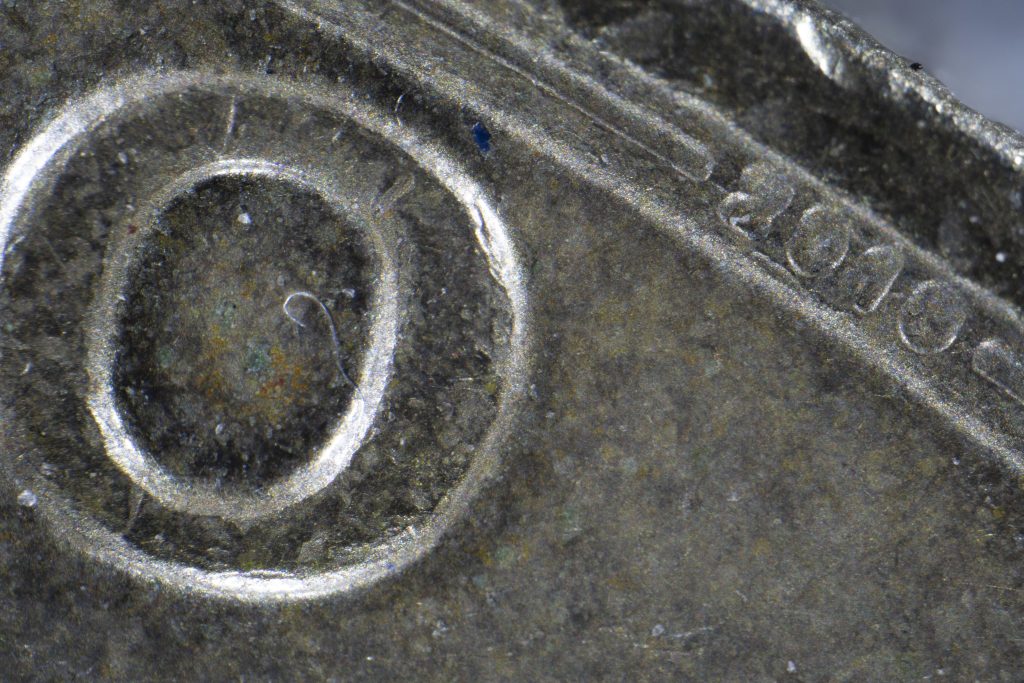
The lens reveals engraving detail, printing methods and wear patterns that are impossible to appreciate with the naked eye. The above photo is the full frame showing the O of One on a One Pound coin…notice the year of creation can be seen which is very hard to see with the naked eye.
Flowers and Plants
Pollen grains, stamens and petal textures become dramatic abstract landscapes.
Minerals and Crystals
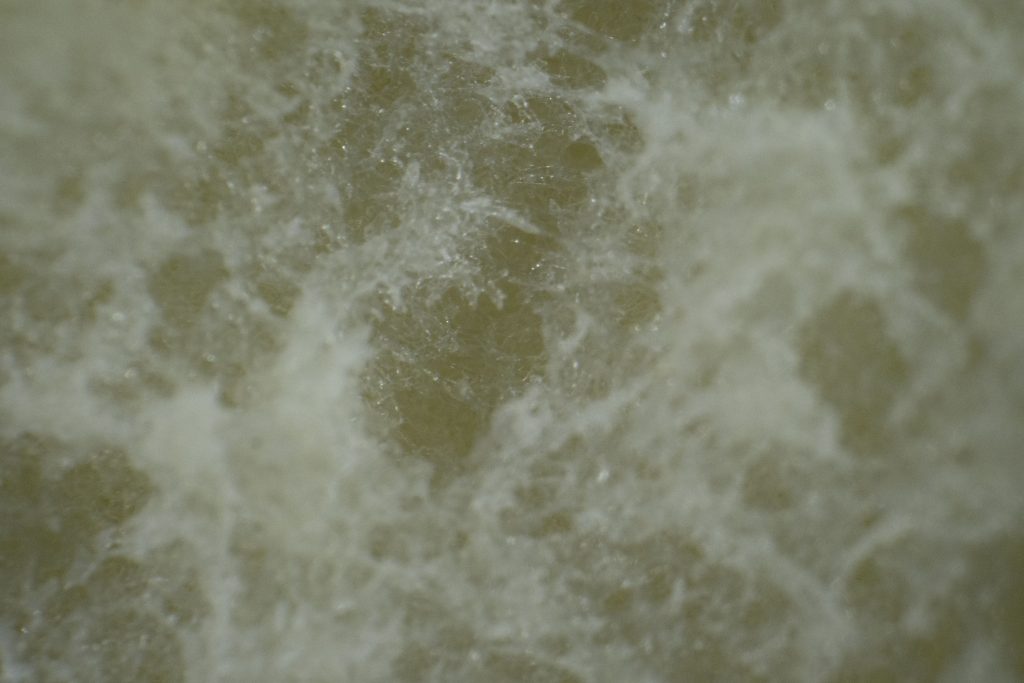
Crystal formations and surface structures are rendered with exceptional detail. Below is the texture of the pith of an orange
Electronic Components
Ideal for documenting circuit boards, solder joints and micro-components.
Scientific and Educational Work
The Nanoha can serve as an affordable alternative to dedicated microscope camera systems for many applications.
Tips for Successful Results
Use a Tripod
Handholding is generally impractical. A sturdy tripod combined with a focusing rail greatly improves accuracy.
Use Live View Magnification
Magnified live view helps identify the precise focus point.
Shoot in Still Air
Even tiny movements can ruin an image.
Experiment with Focus Stacking
Multiple images focused at different distances can be combined to overcome the extremely shallow depth of field.
Use Additional Lighting
The built-in LEDs are useful, but external LED panels or flash systems can provide more control.
Comparison with the Canon MP-E 65mm
The Nanoha X5 is often compared with the legendary Canon MP-E 65mm f/2.8.
Advantages of the Nanoha:
● Smaller and lighter
● Built-in LED illumination
● Lower cost
● Designed for mirrorless systems
Advantages of the Canon:
● Wider magnification range (1x–5x)
● Much longer working distance
● Greater flexibility in the field
The Nanoha is the more specialised tool, while the Canon remains the more versatile option.
Verdict
The Yasuhara Nanoha X5 is one of the most unusual photographic lenses ever produced. It transforms a mirrorless camera into a powerful close-up imaging system capable of revealing a hidden microscopic world.
Its extremely short working distance and razor-thin depth of field mean it is not a lens for casual users. However, photographers with patience and an interest in extreme macro work will discover creative opportunities unavailable with ordinary macro lenses.
For collectors, natural history enthusiasts, product photographers and anyone fascinated by miniature detail, the Nanoha X5 remains a unique and highly capable specialist lens. It may not be a lens you use every day, but when nothing less than 5x magnification will do, few alternatives can match its combination of image quality, portability and affordability.